Love in Paris
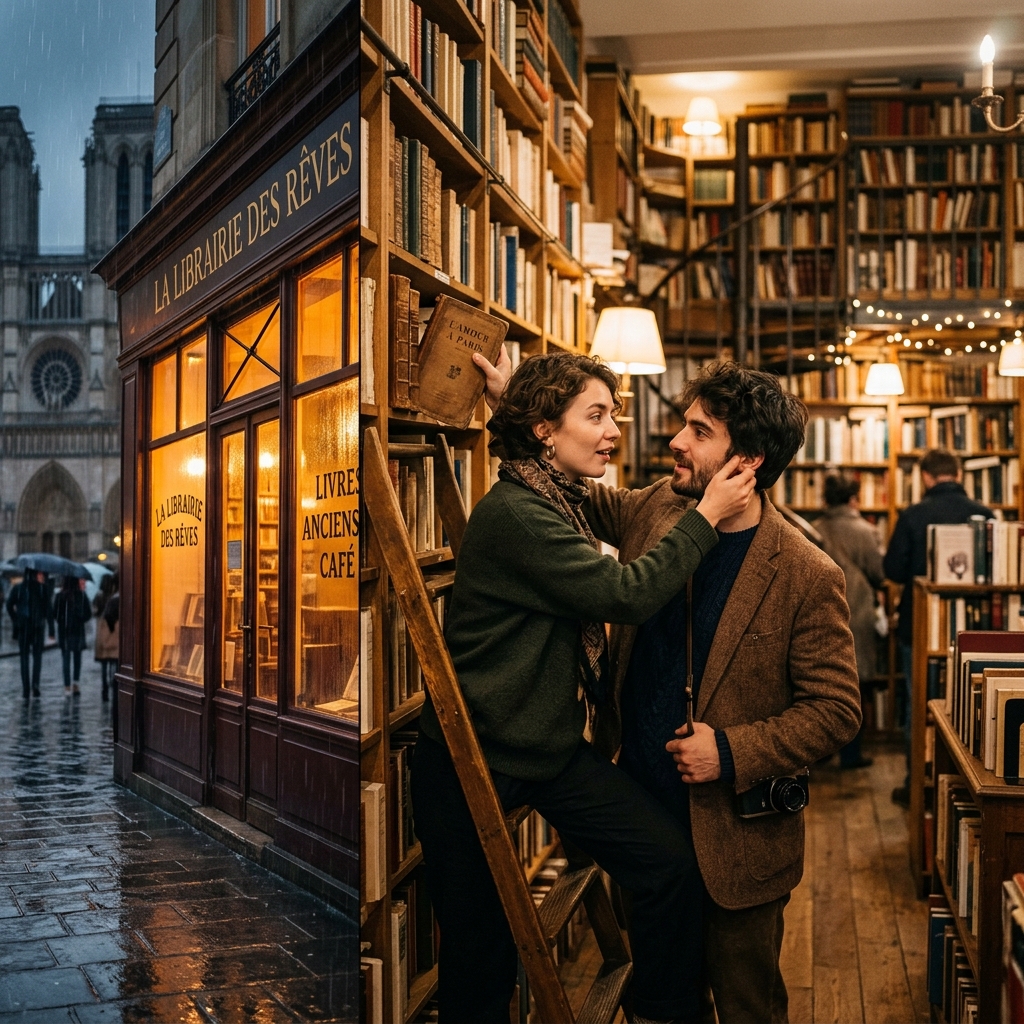
One conversation in this tiny shop may begin a love story neither of them expected.
Story Overview
Juliet Moreau has just arrived in Paris - she left her marketing career behind to paint, a decision her family calls reckless and her heart calls survival. She has a small apartment in Montmartre, paint-stained hands, and a life she is still learning the shape of. Her very first evening alone in the city, ducking into a bookshop to escape the rain, she reaches for a worn novel on the shelf - and her hand meets another.
The rain found Rue de Rivoli before Juliet did.
Chapter Index
Readers can start from the beginning or jump to the latest published chapter.
Main Characters
These profiles stay visible at the story level so late-arriving readers can catch up quickly.

Juliet Moreau
Thirty-two, originally from Bordeaux, the daughter of practical engineers who never understood her brush. Juliet is funny and self-aware but carries a deep fear of choosing the safe path again. She came to Paris to be brave - she's not always sure what brave looks like.

Luc Beaumont
A Parisian by birth who spent five years in Tokyo restoring traditional buildings and returned with a theory that the most beautiful architecture is what people almost don't notice. Luc is quiet in a way that means he is listening, not absent. He reached for that book because he's been searching for the original-cover edition since he was twelve.
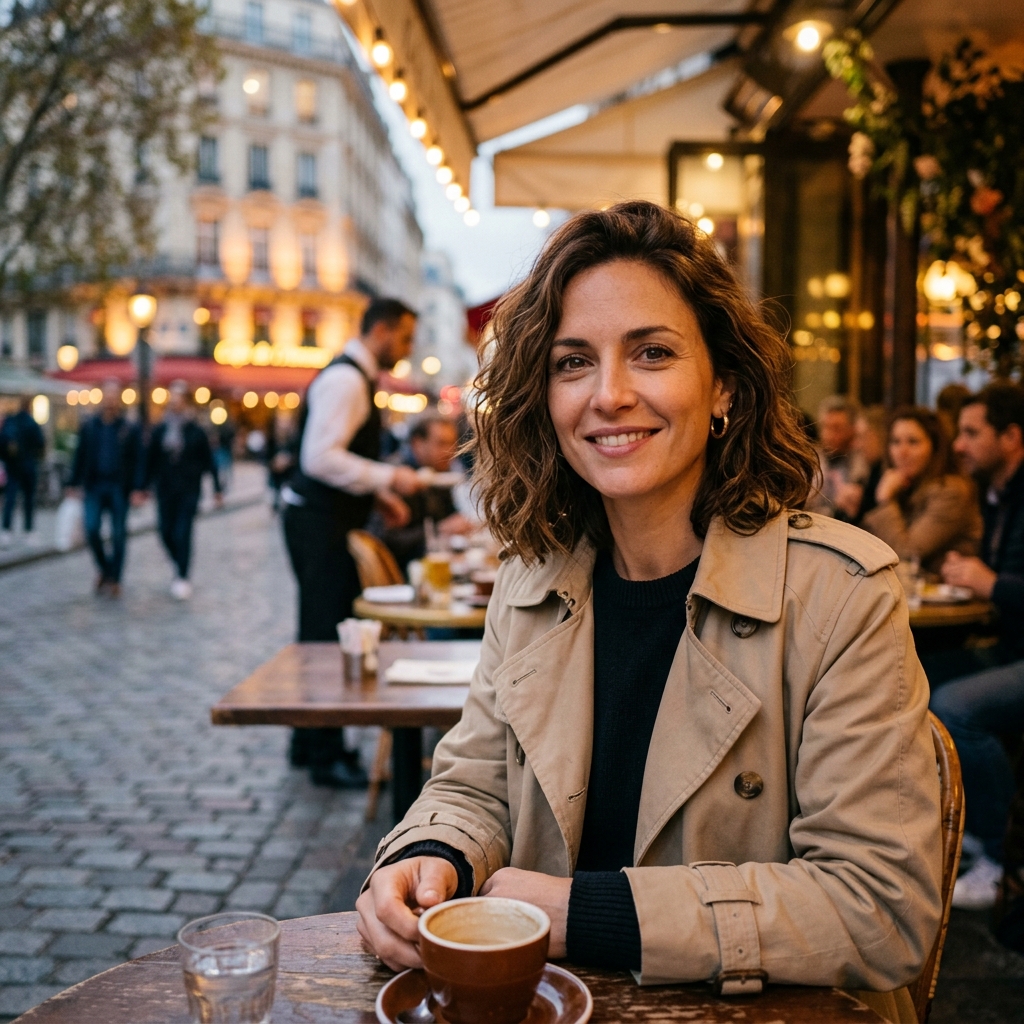
Céline Dupont
Juliet's closest friend in Paris and the most practical romantic she's ever met. Céline has strong opinions on love, timing, and the exact right moment to act. She runs the gallery where Juliet's first Parisian show is scheduled for next month - her advice comes with both emotional investment and ulterior motive.
What Happens Next?
What should happen next?
Loading...